Made possible by

Fritz Sybergs Vej 9
DK 8270 Hojbjerg
Scandinavia
info@dynamicbusinessplan.com












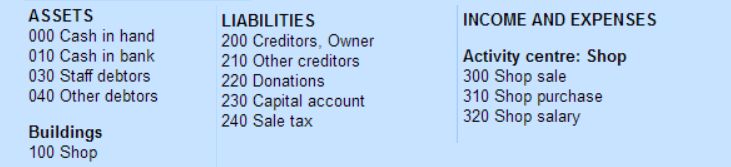
Account Plan - Chart of Accounts
A chart of accounts is a tool to categorise a company´s financial activities, thus creating a better overview.
Companies must have a suitable chart of accounts and there are no provisions as to the contents and structure of a chart of accounts.
Only an outline provision stating that a company must have a chart of accounts designed for its individual requirements. This means that you are allowed to design your own account numbering.
Structure of the accounts
The purpose of a chart of accounts is to secure a fixed structuring of the
accounts created in the bookkeeping.
Typically, the chart is structured like this:
- Accounts concerning the day-to-day running of the company - show the company´s earnings and expenses (Profit and loss)
- Asset accounts - show the values in the company (Assets)
- Liability accounts - show the debt/financing of the company (Liabilities)
Standard chart of accounts
In all bookkeeping programmes for PC there is a standardised chart of accounts.
Therefore, you need to adjust it to suit your company´s specific requirements.
However, in many aspects it suits most small companies as it is. There are
probably a lot of unnecessary accounts for your specific needs. Just delete
them.

Account and information
When you make an account plan for your company you need to know which activities you want to have information about. The shortest account plan you can make consists of two accounts:
- 001 Income
- 002 Expenses
If you have only got these two accounts for registering information about your company´s economy, you will not be able to find out which activities are working well or badly. The only thing you can see is if the company in general is loosing or making money. This is too little information for a modern project or company.
Consider carefully what information you need from your new business. The information you need should be shown in the account plan.
Account and numbering
Each account has - besides its name - its own number. It makes it easier to
work with in the daily work with the accounting.
- Go to next business issue: Example of an Account Plan

Ideas are easy. Implementation is hard.
– Guy Kawasaki, Alltop co-Founder and Entrepreneur